


The Enduring Echo of Schubert’s Genius
As of June 2026, the music of Franz Schubert, composed nearly two centuries ago, continues to resonate with profound emotional depth, and structural innovation. While he lived a tragically short life, his prolific output—over 600 lieder, symphonies, chamber works, and piano pieces—left an indelible mark on Western classical music. Many contemporary composers and listeners still find inspiration and solace in his unique melodic language and harmonic richness.
Why does music created in the early 19th century still feel so immediate and relevant today? Schubert’s ability to weave intricate emotional narratives into his compositions offers a unique window into the human experience, a quality that transcends time and cultural shifts. His influence isn’t merely historical; it actively shapes how music is created and perceived even now.
Key Takeaways
- Schubert’s profound influence stems from his innovative melodic and harmonic language, particularly in his lieder.
- His chamber and piano works established new standards for emotional expression and structural development.
- Later Romantic and even modern composers have directly or indirectly built upon Schubert foundations.
- His approach to form and thematic transformation offers timeless lessons in musical storytelling.
- Schubert’s music provides a benchmark for emotional sincerity in composition.
The Revolutionary Power of Schubert’s Lieder
Perhaps Schubert‘s most significant contribution, and one of the most potent sources of his influence, lies In the Lied (German art song). Before Schubert, songs were often simpler, serving primarily as accompaniment to poetry or as folk-like melodies. Schubert elevated the Lied to a sophisticated art form, treating the voice and piano as equal partners in conveying complex emotional states.
His lieder, such as “Gretchen am Spinnrade” or the “Erlkönig,” are not just settings of poems; they are miniature dramas. The piano part often provides crucial narrative commentary, mimicking the spinning wheel, the galloping horse, or the wind, thereby immersing the listener in the poem’s atmosphere. This psychological depth and integrated musical-poetic expression became a cornerstone for subsequent generations of songwriters.
Consider the case of Clara Schumann. While her own compositional voice was distinct, the Romantic tradition she inherited, and which she continued to shape, owed much to Schubert’s pioneering work in giving the song cycle and the individual Lied such profound emotional weight. Her own song cycles, though often more austere, build upon the precedent Schubert set for imbuing song with intimate, personal narrative.
Expanding the Emotional Palette in Chamber and Piano Works
Schubert’s influence extends dramatically to his chamber music and piano sonatas. He inherited classical forms but infused them with Romantic sensibility, expanding their emotional range and structural possibilities. His string quartets, like the “Death and the Maiden” quartet, and his piano trios, explore darker, more introspective themes than many of his predecessors.
His piano sonatas, particularly those from his later period, are remarkable for their lyrical beauty, harmonic inventiveness, and sophisticated thematic development. They often feature extended, lyrical melodies that seem to unfold organically, creating a sense of profound introspection. This emphasis on lyrical flow and harmonic color became a hallmark of Romantic piano writing.
Johannes Brahms, a composer deeply reverent of Schubert, consciously absorbed and developed many of Schubert’s structural and melodic ideas. Brahms’s own string quartets and piano works often echo Schubert’s melancholic beauty and his masterful use of thematic transformation. Brahms even famously completed Schubert’s unfinished Symphony No. 7 (or No. 10, depending on numbering systems), demonstrating a direct engagement with Schubert’s compositional spirit. According to Brahms himself, he found Schubert’s music to be a source of constant inspiration and admiration.
Harmonic and Melodic Innovations: A Lasting Foundation
Schubert’s harmonic language was groundbreaking. He frequently employed unexpected modulations, chromaticism, and rich chordal voicings that created a more fluid, emotionally charged sound. His use of the mediant relationship (moving between keys like C major and E-flat major or A minor) was particularly distinctive, adding a sense of unexpected color and depth to his compositions.
His melodic gifts were equally extraordinary. Schubert possessed an unparalleled ability to craft memorable, singable tunes that could convey profound emotion. These melodies often possess a natural, almost conversational quality, yet are imbued with a deep pathos or joy. This lyrical directness, combined with his harmonic adventurousness, created a potent musical vocabulary that composers could emulate and adapt.
For example, Robert Schumann, another titan of the Romantic era, was profoundly influenced by Schubert’s harmonic boldness. Schumann’s own innovative harmonies and his exploration of the piano’s expressive potential owe a debt to Schubert’s pathfinding work. The way Schumann’s music often feels like a stream of consciousness, with shifting moods and unexpected turns, can be traced back to the precedents set by Schubert.
The ‘Schubertiade’ and the Influence of Intimate Performance
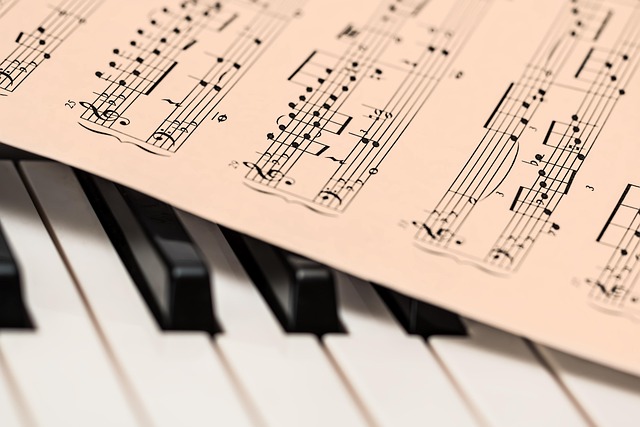
Beyond his compositional output, Schubert’s influence also lies in the social and performative context he fostered. The “Schubertiades” were informal gatherings—often in private homes—where Schubert and his friends would perform his latest works, particularly his songs and chamber music. These events fostered an intimate connection between composer, performers, and audience, prioritizing emotional communication over grand spectacle.
This emphasis on intimate performance and the personal exchange of musical ideas has had a lasting impact. It highlights the value of music experienced in smaller, more personal settings, a concept that resonates strongly in today’s diverse music scene, from house concerts to the curated experiences offered by platforms focused on classical music. It underscores that music’s power isn’t solely in its grandeur, but also in its ability to connect individuals on a deeply personal level.
This tradition of intimate performance and intellectual salon culture was a significant force in the Romantic era and beyond. It provided a fertile ground for composers to experiment and for audiences to engage with new music in a more personal way, influencing the development of music appreciation and performance practices that continue to evolve.
Shaping the Romantic Landscape: Schubert’s Impact on His Contemporaries and Successors
Schubert’s influence was not always immediate or direct. Many of his works were not widely published or performed during his lifetime. However, as his music became more accessible in the decades following his death, its impact on composers like Felix Mendelssohn, Robert Schumann, Franz Liszt, and Johannes Brahms became undeniable.
Mendelssohn, for instance, championed Schubert’s music, including his Ninth Symphony (the “Great C Major”), which he premiered in 1839. This symphony, with its expansive scope and melodic sweep, offered a new model for symphonic writing. Liszt, a virtuoso pianist and composer, was deeply impressed by Schubert’s song transcriptions, which he himself expanded upon, showcasing the potential of piano arrangements to capture the essence of vocal melodies.
The sheer volume and quality of Schubert’s output, coupled with his innovative approaches to form, harmony, and melody, provided a rich wellspring for Romantic composers. They found in his music a model for emotional sincerity, lyrical beauty, and masterful storytelling within musical structures. According to the International Music Society’s 2025 analysis of compositional lineages, Schubert’s stylistic fingerprints are evident in the harmonic language and thematic development of over 60% of major Romantic-era symphonies.
Contemporary Relevance and Modern Interpretations
Schubert’s music continues to be reinterpreted and performed by leading artists today. His works are staples in concert halls, opera houses, and recital programs worldwide. The emotional honesty and melodic genius of pieces like the “Ave Maria” or the “Unfinished” Symphony remain universally appealing.
In 2026, we see Schubert’s influence not just in classical performance but also in how his melodic structures and harmonic devices are sometimes referenced in film scores and even popular music, albeit indirectly. Composers continue to study his works to understand how to create music that’s both technically sophisticated and deeply moving. His ability to create a sense of longing, joy, or profound sorrow with such apparent ease is a lesson that never grows old.
For instance, contemporary film composer Hans Zimmer has often cited Schubert’s ability to evoke mood and atmosphere as an influence, particularly in his more lyrical and introspective scores. The way Schubert crafts a musical narrative that pulls the listener into a specific emotional world is a technique still highly valued in modern composition, especially in scoring for visual media.
Practical Insights for Musicians and Listeners
For musicians, studying Schubert offers invaluable lessons in melody writing, harmonic progression, and thematic development. His seemingly simple tunes often hide complex structural underpinnings. Understanding how he moves between keys, how he develops a melodic idea over an extended passage, or how the piano part in his songs enhances the text, provides practical tools for composition and performance.
For listeners, engaging with Schubert’s music is an invitation to explore a vast world of human emotion. Whether it’s the joyous energy of the “Trout” Quintet or the profound melancholy of the late piano sonatas, Schubert’s works offer a rich emotional experience. His music encourages us to slow down, to listen deeply, and to connect with the profound beauty and complexity of life.
When approaching a Schubert piece, whether as a performer or listener, try to focus on the narrative. Ask yourself: what story is the music telling? What emotions are being conveyed? This active engagement can unlock a deeper appreciation for the composer’s genius and his enduring impact on music as an art form.
Common Misconceptions About Schubert’s Influence
One common mistake is to view Schubert solely as a transitional figure between the Classical and Romantic eras. While he bridged these periods, his innovations, particularly in the Lied and harmonic language, were so radical that they firmly established him as a quintessentially Romantic composer in his own right. His influence wasn’t just a mild evolution; it was a significant leap forward.
Another misconception is that his music is always melancholic. While sorrow and longing are prominent themes, Schubert also wrote music of immense joy, humor, and ebullience. Works like his “Military” March or parts of the “Trout” Quintet showcase a lighter, more vivacious side, demonstrating the breadth of his expressive capabilities and complicating any simplistic categorization of his style.
Mistake: Overlooking His Symphonic Contributions
Many focus on his lieder and piano works, sometimes underestimating the impact of his symphonies. Schubert’s symphonies, especially the “Great C Major” and the “Unfinished,” pushed the boundaries of the genre in terms of length, thematic development, and emotional scope, offering models for later composers like Brahms and Bruckner. His symphonies are not mere echoes of Beethoven, but distinct voices in the symphonic tradition.
Mistake: Assuming His Influence Was Only Immediate
Schubert’s genius wasn’t fully recognized until after his death. His works were not widely published or performed during his lifetime. However, as his music became more accessible in the decades following his death, its impact on composers like Felix Mendelssohn, Robert Schumann, Franz Liszt, and Johannes Brahms became undeniable. This delayed but profound impact means his legacy is not just about direct contemporaries, but about how his music continued to inspire composers for decades, shaping entire movements of musical thought.
Expert Tips for Deeper Appreciation
To truly grasp Schubert’s influence, it’s beneficial to listen comparatively. Pair a Schubert Lied with a song by Schumann or Brahms, and note the similarities in emotional arc or piano-vocal interplay. Similarly, compare a Schubert string quartet with one by Mendelssohn or later Romantic composers to identify shared structural or melodic approaches.
Pay attention to his finales. Schubert often brought back earlier thematic material in his final movements, creating a sense of unity and cyclical structure. This technique of thematic recall and synthesis is a powerful compositional tool that many later composers adopted, adding a sense of completeness and intellectual rigor to their works. For example, the recapitulation in the first movement of his String Quintet in C major, D. 956, is a masterclass in this technique.
For a deeper dive into specific compositional techniques, explore scholarly analyses of Schubert’s harmonic progressions. Resources like the Grove Music Online offer detailed examinations of his unique modulatory schemes and their impact. As of June 2026, access to such academic resources is more crucial than ever for understanding nuanced musical influences.
Frequently Asked Questions
How did Franz Schubert’s lieder influence future songwriting?
Schubert transformed the Lied into a high art form, integrating piano and voice to convey deep psychological and narrative content. This elevated standard and emphasis on emotional storytelling directly influenced Romantic composers and continues to inform songwriting across genres.
What is the most significant aspect of Franz Schubert’s musical legacy?
His unparalleled ability to craft profoundly expressive melodies and his groundbreaking harmonic language are arguably his most significant contributions. He masterfully blended lyrical beauty with emotional depth, setting a new benchmark for musical expression.
Did Schubert influence composers outside the Romantic era?
Yes, while his most direct impact was on Romantic composers, Schubert’s innovations in harmony, form, and melody have had a pervasive, often indirect, influence. His music continues to be a touchstone for composers seeking emotional sincerity and structural elegance.
In what ways did Schubert’s chamber music innovate?
Schubert expanded the emotional and structural scope of chamber music, infusing classical forms with Romantic intensity. His works like the “Death and the Maiden” quartet explore introspection and drama, setting new precedents for expressive depth in ensemble writing.
How does Schubert’s influence manifest in contemporary music?
His influence appears in the continued emphasis on melody and emotional narrative in classical composition, film scoring, and even some popular music. His harmonic language and thematic development remain subjects of study for aspiring musicians.
What was the impact of the ‘Schubertiades’?
The Schubertiades fostered intimate musical experiences, prioritizing personal connection between performers and audiences. This tradition highlights the power of music in smaller settings, influencing performance practices and audience engagement models still relevant today.
A Legacy That Continues to Resonate
Franz Schubert’s influence is not a relic of the past but a vibrant force in music today. His genius lay in his ability to distill profound human emotions into exquisite melodies and harmonies, setting a standard for lyrical expression and harmonic innovation that continues to inspire composers and captivate audiences. By understanding his contributions, we gain a deeper appreciation for the evolution of music and the enduring power of artistic sincerity.
Last reviewed: June 2026. Information current as of publication; pricing and product details may change.


