


Franz schubert romantic era: Franz Schubert: A Romantic Era Luminary
Franz Schubert, born in 1797, remains one of the most beloved and influential composers of the early Romantic era. His prolific output, characterized by profound emotional depth and melodic brilliance, cemented his status as a master of song, chamber music, and symphonic forms. As of June 2026, his works continue to captivate audiences worldwide, offering a window into the burgeoning artistic spirit of the 19th century.
Most readers searching this topic want to understand how Schubert fits into the broader Romantic movement. Was he a transitional figure, or a true embodiment of Romantic ideals? While his early works show classical foundations, his later compositions are undeniably steeped in the Romantic spirit of individualism, emotional intensity, and a fascination with nature and the human psyche. His music doesn’t just follow the rules; it bends them to express a uniquely personal vision.
Key Takeaways
- Franz Schubert was a key composer of the early Romantic era, known for his deeply emotional and melodic music.
- He successfully bridged classical structures with Romantic expressiveness, particularly in his vast output of Lieder (songs).
- Key works like the “Unfinished” Symphony and “Death and the Maiden” quartet exemplify his Romantic sensibilities.
- Despite limited recognition during his lifetime, Schubert’s influence on subsequent composers and his enduring popularity are undeniable.
- His music often explores themes of nature, longing, and the human condition, hallmarks of the Romantic period.
Roots in Classical Tradition
While celebrated as a Romantic, Franz Schubert‘s musical education and early compositions were firmly rooted in the Classical tradition. He studied with Antonio Salieri, a prominent figure in Viennese musical life, who instilled in him a strong understanding of formal structure and contrapuntal technique. This classical grounding is evident in the clarity and balance of his early symphonies and string quartets.
For instance, his Symphony No. 1 in D major (D. 82), composed when he was just 16, displays the four-movement structure and harmonic language typical of Haydn and Mozart. The graceful melodies and well-defined themes showcase a composer mastering established forms. This period of apprenticeship was crucial, providing the framework upon which he would later build his uniquely Romantic innovations.

The Birth of Lied and Romantic Expression
Schubert‘s most profound contribution to the Romantic era is arguably his development of the German Lied, or art song. He elevated this genre from simple strophic settings to complex, dramatic narratives that explored the inner emotional lives of individuals. His settings of poems by Goethe, Müller, and others captured the Romantic fascination with nature, love, loss, and longing.
Consider the song “Gretchen am Spinnrade” (D. 118) from his “Faust” collection. The spinning wheel motif in the piano accompaniment, the surging melody reflecting Gretchen’s inner turmoil, and the dramatic arc of the vocal line all combine to create an intensely personal and psychological portrait. This was a significant departure from the more objective or narrative-driven songs of the Classical period.
Symphonic Masterpieces of the Romantic Spirit
Beyond Lieder, Schubert‘s symphonies are cornerstones of the Romantic repertoire. His Symphony No. 8 in B minor, D. 759, famously known as the “Unfinished” Symphony, is a prime example. Its two completed movements are imbued with a lyrical beauty and poignant melancholy that resonate deeply with Romantic ideals. The unfinished nature itself became a subject of Romantic interpretation, suggesting an unfulfilled longing or a vastness of emotion that could not be contained.
And, his Symphony No. 9 in C major, D. 944, often called “The Great” C Major, is a monumental work that showcases his mastery of symphonic structure and his ability to weave intricate melodic threads into a grand, sweeping narrative. According to classical music historians, its scale and emotional scope pushed the boundaries of the symphonic form, influencing later Romantic composers like Brahms and Bruckner. The sheer length and thematic development require a listener’s deep engagement, a characteristic of Romantic artistic appreciation.
Chamber Music: Intimacy and Innovation
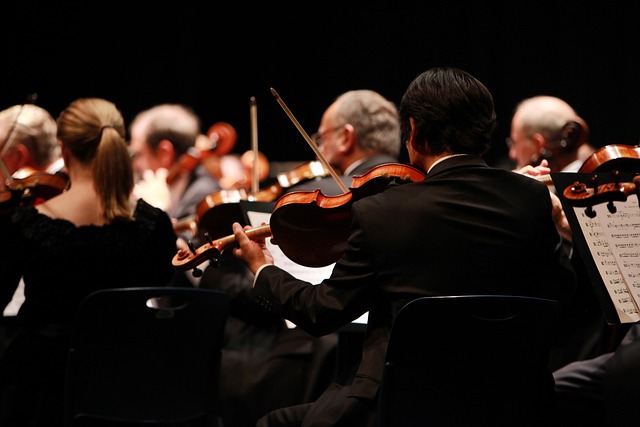
Schubert’s chamber music is equally vital to understanding his Romantic output. Works like the String Quartet No. 14 in D minor, D. 810, subtitled “Death and the Maiden,” are intensely dramatic and personal. The quartet’s themes, drawn from his own song of the same name, explore mortality and defiance with a raw emotional power that’s distinctly Romantic.
Another masterpiece, the Piano Quintet in A major, D. 667, known as the “Trout” Quintet, is celebrated for its effervescent charm and thematic ingenuity. The variations on the “Trout” theme in the fourth movement are a testament to Schubert’s playful yet sophisticated compositional skill, showcasing a lighter, more pastoral side of Romanticism. This work, written for a patron, demonstrates how chamber music could be both intimate and brilliantly virtuosic.
The Schubertiade: A Romantic Social Phenomenon
The “Schubertiade” was more than just a concert; it was a social gathering often held in private homes, featuring Schubert’s music, poetry readings, and lively conversation. These events were central to Schubert’s life and the dissemination of his work among his circle of friends, including artists, poets, and fellow musicians. This intimate, informal setting reflects the Romantic era’s emphasis on personal connection and artistic community.
These gatherings fostered a sense of shared artistic experience, a stark contrast to the more formal, public concerts of the preceding era. The Schubertiade embodied the Romantic ideal of the artist as part of a Bohemian intellectual circle, where creativity flowed freely and was appreciated by peers. It highlighted how music in the Romantic era was not just for concert halls but was woven into the fabric of social life.
Schubert’s Legacy and Enduring Influence
Despite enjoying only limited public recognition during his short life, Franz Schubert’s music profoundly impacted subsequent generations of composers. Figures like Robert Schumann, Johannes Brahms, and His melodic genius deeply inspired felix Mendelssohn, his harmonic daring, and his ability to convey profound emotion. Brahms, in particular, championed Schubert’s work, editing and publishing many of his previously unknown compositions.
As of June 2026, Schubert’s catalogue of over 1,500 works, including approximately 600 songs, 21 piano sonatas, and 9 symphonies (including the “Unfinished” and “Great” C Major), remains a cornerstone of the classical music repertoire. His unique blend of Classical structure and Romantic expression ensures his continued relevance and appeal. The emotional honesty in his music continues to speak to listeners, making him a timeless figure in music history.
Common Misconceptions About Schubert and the Romantic Era
One common misconception is viewing Schubert solely as a “Classical” composer who dabbled in Romanticism. While his early works adhere to Classical conventions, his mature output, especially his later Lieder and symphonies, is unequivocally Romantic. The emotional intensity, focus on individual subjectivity, and exploration of psychological landscapes are hallmarks of the Romantic movement, not Classical.
Another mistake is assuming his limited fame during his lifetime meant his music was unappreciated. His intimate circle highly valued he, and the Schubertiade was a testament to his immediate impact. The wider recognition came later, as is often the case with artists whose innovations were ahead of their time. The appreciation of his genius has only grown over the decades, proving the enduring power of his musical language.
Appreciating Schubert Today: Practical Insights for 2026
To truly appreciate Schubert’s place in the Romantic era as of June 2026, consider focusing on specific works that exemplify his style. For Lieder, begin with “Gretchen am Spinnrade,” “Erlkönig,” or selections from “Die schöne Müllerin.” Listen for how the piano part complements and amplifies the singer’s emotions, creating a unified dramatic experience.
In chamber music, “Death and the Maiden” quartet offers a powerful journey through intense emotions. For symphonic grandeur, engage with the “Unfinished” or “Great” C Major symphonies, paying attention to the lyrical melodies and the expansive harmonic structures. Understanding the context of the Romantic era—its emphasis on individualism, nature, and subjective experience—enhances the appreciation of Schubert’s profound musical contributions.
Frequently Asked Questions
What makes Schubert’s music Romantic?
Schubert’s music is Romantic due to its intense emotional expression, lyrical melodies, harmonic innovations, and exploration of themes like nature, longing, and the subjective human experience. He infused Classical forms with a deeply personal and dramatic sensibility.
Was Franz Schubert a classical or Romantic composer?
Schubert is best understood as a transitional composer, with early works showing strong Classical influences and later works deeply embodying Romantic ideals. He is often considered a pioneer of the early Romantic era.
What is the most famous Schubert Lied?
While many are famous, “Erlkönig” (The Elf King) is one of his most celebrated and dramatic Lieder, showcasing his narrative skill and ability to portray multiple characters within a single song.
How did Schubert influence later composers?
Schubert’s innovative harmonic language, melodic genius, and profound emotional depth in his songs and symphonies directly inspired composers like Schumann, Brahms, and Mendelssohn, shaping the course of Romantic music.
What are key characteristics of Schubert’s Romantic symphonies?
Expansive melodies characterizs his Romantic symphonies, dramatic contrasts, innovative harmonic progressions, and a focus on lyrical beauty and emotional depth, exemplified by the “Unfinished” and “Great” C Major symphonies.
Why was Schubert’s music not widely recognized during his lifetime?
Schubert’s music was often too complex or personal for the prevailing public tastes and performance venues of his time. He found greater appreciation within his close circle of friends and musicians.
A Lasting Romantic Voice
Franz Schubert’s genius lies in his ability to channel the nascent Romantic spirit into musical forms that were both deeply personal and universally resonant. His works, whether grand symphonies or intimate Lieder, continue to speak to the human condition with unparalleled emotional honesty and melodic beauty. To truly grasp the essence of the Romantic era, an exploration of Schubert’s vast and profound musical landscape is indispensable.
Last reviewed: June 2026. Information current as of publication; pricing and product details may change.


