
back through its historical context. The flag is a visual narrative, each iteration reflecting a different chapter in Sudan’s quest for nationhood and self-determination. The story is one of independence, coups, and shifting political alliances, all imprinted onto the national emblem.
Last updated: June 10, 2026
Before the current design, Sudan experimented with other flags that marked crucial periods in its history. The initial flag adopted upon independence in 1956 was a horizontal tricolor of blue, yellow, and green. This flag represented a nascent nation, hopeful for a bright future. However, this symbol of early independence was short-lived, replaced following the 1969 military coup led by Gaafar Nimeiry.
The transition to the current flag in 1970 marked a significant shift in Sudan’s political orientation. The adoption of the Arab Liberation Flag-inspired design signaled a move towards closer ties with other Arab nations and a redefinition of national identity under a new regime. This historical backdrop is essential for understanding the deeper layers of meaning embedded within the current Sudan flag.

Decoding the Colors: The Symbolic Meanings of the Sudan Flag
Every element of the Sudan flag is imbued with meaning, contributing to a powerful visual language that speaks to the Sudanese people and the world. The colors are not arbitrary; they are deliberate choices, each carrying historical, political, and cultural significance. Understanding these meanings provides profound insight into the nation’s identity and values.
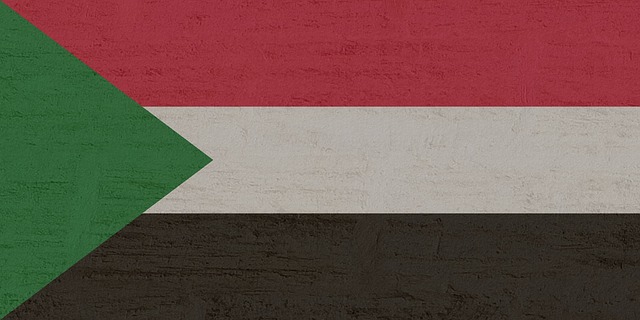
The prominent horizontal bands are red, white, and black. Red symbolizes the struggle and sacrifices made by Sudan’s martyrs in their fight for independence and freedom. It’s a color of courage, resilience, and the blood spilled for the nation’s sovereignty. White represents peace, purity, and optimism for a brighter future, reflecting the nation’s hope for stability and prosperity. Black, a color often associated with the nation’s name (Sudan deriving from ‘black’ in Arabic), signifies the dark days of colonialism and oppression, but also the rich, fertile soil of the land.
The striking green triangle at the hoist is equally significant. It represents Islam, the predominant religion in Sudan, and also symbolizes the nation’s agricultural wealth and its hope for growth and prosperity. This triangle points towards the future, a visual cue of progress and development. Together, these colors and the geometric design form a cohesive emblem that resonates deeply with Sudanese identity.
The Pan-Arab Connection: Influence of the Arab Liberation Flag
The design of the Sudan flag is not unique; it shares a common ancestry with several other national flags in the Arab world. The inspiration largely stems from the Arab Liberation Flag, a design that emerged from the Egyptian Revolution of 1952. This flag, with its horizontal red, white, and black stripes, became a symbol of pan-Arabist and anti-colonial sentiment across the region.
Following Egypt’s lead, many Arab nations adopted flags that echoed this theme, signifying a shared desire for independence and unity. Sudan’s adoption of this motif in 1970 was a clear statement of its alignment with these regional aspirations. It signified a commitment to Arab solidarity and a rejection of foreign influence, a sentiment that remained potent in regional politics throughout the late 20th century and continues to be a factor in geopolitical discussions as of June 2026.
The green triangle, while a distinct addition for Sudan, complements the Pan-Arab colors, adding a unique national identity to the broader regional symbolism. This blend of shared heritage and specific national character makes the Sudan flag a compelling symbol.

The Green Triangle: Sudan’s Distinctive National Identifier
While the red, white, and black stripes connect the Sudan flag to a broader regional narrative, the vibrant green triangle is its defining feature, setting it apart and imbuing it with specific national significance. This element is crucial for understanding the flag’s unique identity and the pride it evokes among Sudanese people.
The triangle’s placement at the hoist, the side closest to the flagpole, is deliberate. It’s positioned to catch the viewer’s eye first, serving as an immediate national marker. The color green itself carries multiple layers of meaning. Primarily, it represents Islam, the religion practiced by the majority of Sudan’s population. This religious affiliation is a significant aspect of Sudanese culture and identity.
Beyond its religious connotations, green in the Sudanese context also signifies the nation’s fertile land and its agricultural potential. Sudan is a country with vast arable land, and its economy has historically relied heavily on agriculture. The green triangle, therefore, also speaks to the nation’s natural resources and its hopes for agricultural development and prosperity. It’s a visual reminder of the country’s bounty and the potential for growth, a sentiment particularly relevant in ongoing discussions about food security and sustainable development in 2026.
Political and Social Interpretations of the Sudan Flag
The Sudan flag, like any national symbol, is subject to various interpretations that reflect the country’s complex political and social landscape. While the official meanings are clear, the flag also carries weight in how it’s perceived and used during different periods of Sudanese history.
During times of national unity or strong patriotic sentiment, the flag is a powerful symbol of solidarity. It’s proudly displayed during national holidays, sporting events, and official ceremonies. However, in periods of political unrest or division, the flag can also become a focal point for dissent or a symbol of the ruling regime, depending on the context. For example, during significant political transitions or protests, the way the flag is displayed or carried can carry nuanced messages about national identity and political allegiance.
The flag’s association with the Arab Liberation Flag also means it can be interpreted through the lens of regional politics. While it signifies unity with the Arab world, it can also be seen as a symbol of a specific political ideology or alignment that may not be universally embraced by all segments of Sudanese society. Understanding these layered interpretations is key to grasping the full cultural and political resonance of the Sudan flag in the contemporary era.
Recent Developments and the Flag in 2026
As of June 2026, Sudan continues to navigate a challenging period marked by internal conflict and humanitarian crises. In such times, national symbols like the flag take on heightened significance. The flag remains a potent reminder of national identity and a rallying point for unity, even amidst division.
International organizations and diplomatic efforts often reference national flags as symbols of sovereign states. For instance, discussions involving international bodies such as the United Nations or regional organizations like the African Union will invariably involve the display and recognition of the Sudan flag, underscoring its role in international relations. Reports from organizations like the World Population Review in June 2026 continue to highlight Sudan’s complex situation, where national symbols play a role in collective identity.
The flag’s presence in media coverage, whether it’s reporting on humanitarian aid efforts or diplomatic engagements, reinforces its status as the primary symbol of the Sudanese state. It serves as a constant visual anchor, connecting the present struggles and future aspirations of the nation to its historical narrative.
Practical Considerations: Flag Etiquette and Display
Beyond its symbolic meaning, the Sudan flag, like any national flag, is subject to specific protocols regarding its display and use. These guidelines are often codified in national legislation or customary practices, ensuring respect for the symbol of the nation.
Standard flag etiquette dictates that the national flag should be flown prominently and with respect. When displayed alongside other flags, the Sudan flag should typically be given precedence, often flown from the highest point or the leftmost position from the perspective of an observer. It should not be displayed in a damaged or soiled condition.
In Sudan, adherence to these protocols is particularly important during national holidays and official events. The flag’s presence reinforces national pride and remembrance. For individuals or organizations wishing to use the flag, understanding and respecting these norms is crucial. For example, official government buildings, schools, and public institutions are expected to fly the flag daily. Private citizens also have the right and, in some contexts, the responsibility to display it, especially during national celebrations.
A Comparative Look: The Sudan Flag in Regional Context
To fully appreciate the distinctiveness of the Sudan flag, it’s beneficial to compare it with flags of neighboring or culturally related countries. This comparative analysis highlights shared influences and unique national characteristics.
Many North African and Middle Eastern countries use variations of the Pan-Arab colors – red, white, black, and green. For instance, Egypt’s flag shares the red, white, and black horizontal bands, with its own national emblem, the Eagle of Saladin, in the center. Iraq and Syria also employ these colors, often with green stars or inscriptions. Yemen’s flag, while having the same horizontal bands, doesn’t feature a triangle. The flag of the United Arab Emirates uses green, white, red, and black, but in a different configuration with a vertical red stripe on the hoist.
The key differentiator for Sudan is the prominent green triangle. While other flags might incorporate green (like Algeria’s vertical green and white with a red star and crescent), the specific triangular design and its placement on a horizontal tricolor are unique to Sudan within this immediate regional context. This distinctiveness underscores Sudan’s ability to adapt shared symbolic language to express its individual national identity.

Common Misconceptions About the Sudan Flag
Despite its clear symbolism, the Sudan flag can sometimes be subject to misunderstandings or misconceptions. Addressing these helps in fostering a clearer appreciation of its meaning and history.
One common misconception is that the flag is identical to others, overlooking the significance of the green triangle. While it shares the Arab Liberation Flag’s palette, the triangle is Sudan’s distinct identifier. Another potential misunderstanding relates to the interpretation of the colors. While the official meanings are well-documented, some might assign more generalized or personal interpretations, which, while valid on an individual level, may not align with the national intent.
Additionally, the historical context of the flag’s adoption can be overlooked. Some might assume it has always been this way, failing to recognize the significant political shifts it represents, such as the move away from the post-independence blue, yellow, and green design. Understanding these nuances is vital for a complete picture.
Expert Insights on Sudanese Vexillology
Vexillology, the study of flags, offers a professional lens through which to view the Sudan flag. Experts in this field often highlight the strategic design choices that contribute to a flag’s impact and memorability.
According to vexillologists, the strength of the Sudan flag lies in its clear, bold design and its direct connection to potent regional symbolism. The use of the Pan-Arab colors ensures immediate recognition and association with broader political and cultural movements. Dr. Elias Hassan, a researcher specializing in African national symbols, noted in a 2025 interview that “the green triangle serves as a crucial visual anchor, preventing the flag from becoming indistinguishable from its regional counterparts. It’s a clever way to assert national identity within a shared symbolic framework.”
The simplicity of the design also contributes to its effectiveness. It’s easily reproducible on various media and recognizable even at a distance. This practicality is a hallmark of well-designed national flags, ensuring their widespread and consistent representation. The ongoing political situation in Sudan also means that the flag, as a symbol of the state, is frequently observed in news coverage, reinforcing its presence and significance in the global consciousness.
Frequently Asked Questions About the Sudan Flag
What are the main colors of the Sudan flag?
The main colors of the Sudan flag are red, white, black, and green. These colors are arranged in a horizontal tricolor of red, white, and black, with a green triangle at the hoist side.
When was the current design of the Sudan flag adopted?
The current design of the Sudan flag was officially adopted on May 20, 1970, during the regime of President Gaafar Nimeiry.
What does the green triangle on the Sudan flag represent?
The green triangle on the Sudan flag represents Islam, the predominant religion in Sudan, and also symbolizes the country’s agricultural wealth and hope for future growth and prosperity.
What is the historical inspiration for the Sudan flag’s design?
The Sudan flag’s design, particularly its red, white, and black stripes, is inspired by the Arab Liberation Flag, which emerged from the Egyptian Revolution of 1952 and became a symbol of pan-Arabist.
What were the previous flags of Sudan?
Before the current flag, Sudan used a flag with horizontal bands of blue, yellow, and green upon gaining independence in 1956, which was later replaced after the 1969 military coup.
How does the Sudan flag’s symbolism relate to Sudanese culture?
The flag’s symbolism connects to Sudanese culture through its representation of historical struggles (red), peace and optimism (white), the nation’s identity and past (black), and religious faith and agricultural bounty (green).
Conclusion: A Living Symbol of Sudan
The Sudan flag is a profound emblem, weaving together the threads of national history, cultural identity, and political aspirations. From its roots in the Pan-Arab movement to its specific national symbolism through the green triangle, it tells a compelling story of Sudan’s journey. As of June 2026, amidst ongoing challenges, the flag continues to stand as a testament to the resilience and enduring spirit of the Sudanese people.
For anyone seeking to understand Sudan, delving into the meaning and history of its flag is an essential step. It offers a unique perspective on the nation’s past, present, and its hopes for the future, making it a truly living symbol.
Last reviewed: June 2026. Information current as of publication; pricing and product details may change.
Editorial Note: This article was researched and written by the Day Spring Management editorial team. We fact-check our content and update it regularly. For questions or corrections, contact us.