

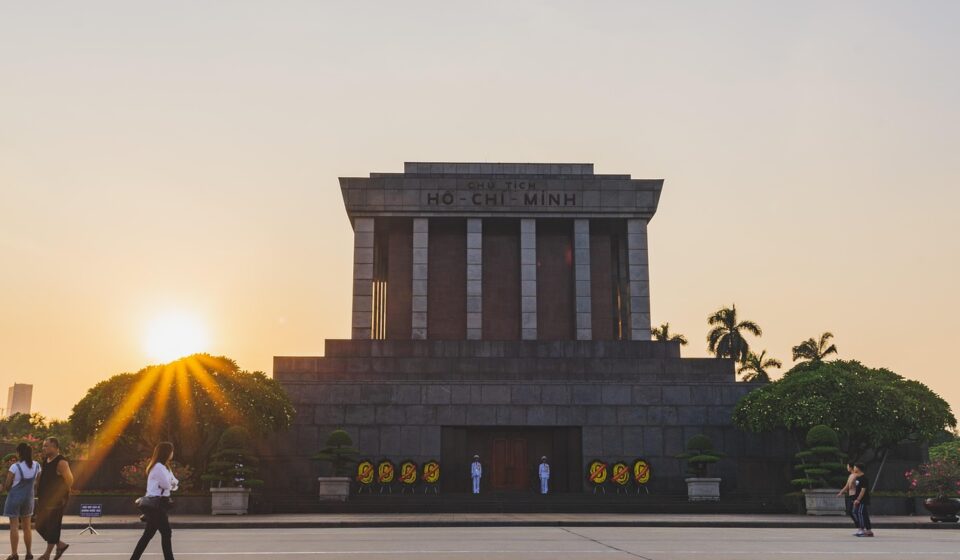
The Ho Chi Minh Trail: A Lifeline of War and Resilience
Most people think of the Ho Chi Minh Trail as a single, dusty path. In reality, it was an intricate web of over 12,000 miles of jungle tracks, rivers, and tunnels that served as the vital artery for North Vietnamese forces during the Vietnam War. As of June 2026, its legacy continues to be studied for its incredible engineering and strategic impact, challenging conventional notions of warfare.
Last updated: June 10, 2026
Key Takeaways
- The Ho Chi Minh Trail was an extensive, multi-modal logistical network, not a single path, spanning over 12,000 miles through Vietnam, Laos, and Cambodia.
- It was primarily used to transport personnel and materiel from North Vietnam to support Viet Cong and PAVN forces in South Vietnam.
- Despite extensive bombing campaigns, the trail was continuously repaired and adapted, showcasing remarkable resilience and ingenuity.
- Its existence and persistence profoundly impacted the course of the Vietnam War and the political world of Southeast Asia.
- As of 2026, the trail remains a significant historical site and a subject of ongoing study in military strategy and logistical planning.
Defining the Ho Chi Minh Trail: A Masterpiece of Military Logistics
When we talk about the Ho Chi Minh Trail, we’re not discussing a single road. It was a vast, complex logistical network, often referred to by the Vietnamese as the Trường Sơn Strategic Transport Corridor. This system evolved significantly from its inception in 1959, transforming from rudimentary footpaths into an elaborate system of roads, bridges, tunnels, and even waterways. Its primary purpose was to move troops and supplies from North Vietnam to support the communist insurgency in South Vietnam. The sheer scale and adaptability of this network are what make it a legendary, albeit grim, achievement in military history. It was named after North Vietnam’s President Hồ Chí Minh, a testament to its strategic importance and the leader it served.

From Humble Beginnings to a War Machine: The Trail’s Genesis
The seeds of the Ho Chi Minh Trail were sown in July 1959, a year after the establishment of the Ho Chi Minh road system during the First Indochina War. The North Vietnamese recognized the need for a secure, overland supply route to bolster their forces and influence in the South. This initial phase involved developing basic trails through dense jungle and mountainous terrain. Over time, the trail system expanded dramatically, incorporating existing routes and creating new ones that traversed the challenging landscapes of Laos and Cambodia. This strategic decision to use neutral territory allowed North Vietnam to bypass direct confrontation and maintain a constant flow of support, significantly complicating US and South Vietnamese military efforts.
Mapping the Arteries: The Trail’s Routes and Infrastructure
The Ho Chi Minh Trail wasn’t a single line on a map but a sprawling network comprising multiple parallel routes and feeder paths. These routes ran through the Anna mite Range, a formidable mountain chain that provided natural cover but also posed immense logistical challenges. The system was dynamic, with sections constantly being rerouted, repaired, or camouflaged. Key components included:
- Footpaths and dirt roads: The backbone of the network, often widened and maintained by thousands of laborers.
- Rivers and canals: Used for transporting heavy equipment and supplies, particularly in the lower, flatter regions.
- Tunnels and underground complexes: Extensive networks were dug to shelter troops and supplies from aerial bombardment, serving as vital rest stops and repair depots.
- Bridges and ferries: Essential for crossing rivers and ravines, these were often targets for allied bombing but were quickly rebuilt.
The sheer ingenuity involved in maintaining such an infrastructure under constant enemy fire is a testament to the dedication of the personnel involved.
Fueling the War: What Was Transported Down the Trail?
The Ho Chi Minh Trail was the primary conduit for North Vietnam’s war effort against the South. The volume and variety of materiel moved were staggering, sustaining a protracted conflict. Beyond just manpower, the trail facilitated the movement of:
- Weapons and Ammunition: From small arms to heavy artillery and anti-aircraft guns.
- Food and Medical Supplies: Essential for sustaining thousands of troops operating in challenging conditions.
- Fuel and Spare Parts: For trucks, motorcycles, and other equipment used along the routes.
- Communication Equipment: Radios and other devices crucial for coordinating operations.
- Reinforcements: Hundreds of thousands of soldiers, many of whom were young conscripts, made the arduous journey south.
The trail’s capacity was so immense that it’s estimated that over 800,000 soldiers and 600,000 tons of supplies traversed its paths throughout the war, according to various historical analyses. The logistical feat alone is a subject of much study in military strategy circles as of 2026.
Operation Commando Hunt and the War for the Trail
The United States recognized the critical importance of the Ho Chi Minh Trail and launched a sustained, massive bombing campaign, codenamed Operation Commando Hunt, to interdict its use. This involved strategic bombing of key points, interdiction missions using various aircraft, and sophisticated surveillance technologies, including sensors dropped along the routes. However, the trail proved incredibly resilient. North Vietnamese engineers and laborers worked tirelessly, often under extreme danger, to repair bomb damage, build new routes, and camouflage their movements. They developed ingenious methods, such as using water to wash away bomb craters and bamboo to create camouflaged shelters. This constant battle of attrition, with the US trying to destroy and North Vietnam trying to rebuild, became a defining feature of the war.
“The trail was a testament to human endurance and ingenuity. For every bomb dropped, they found a way to adapt and continue. It was a war of wills as much as a war of machines.”
— A common sentiment expressed by military historians studying the conflict.
The Trail’s Shadow: Impact on Laos and Cambodia
The Ho Chi Minh Trail’s existence had devastating consequences for the neutral nations of Laos and Cambodia, through which much of the network passed. These countries became unwitting battlegrounds, subjected to intense bombing campaigns and ground incursions by both sides of the conflict. The bombing of Laos, in particular, was one of the heaviest in history, with the U.S. dropping more ordnance on the small nation than all theaters combined during World War II. This campaign aimed to disrupt North Vietnamese supply lines but left a legacy of unexploded ordnance (UXO) that continues to plague Laos and Cambodia to this day. As of June 2026, millions of UXO still litter the countryside, posing a constant danger to civilians and hindering development efforts.

The Human Cost: Life for Those Who Traversed the Trail
The journey along the Ho Chi Minh Trail was perilous and fraught with hardship. Soldiers faced not only the constant threat of aerial bombardment and booby traps but also the brutal realities of the jungle environment. Conditions were often dire:
- Disease: Malaria, dysentery, and other tropical diseases were rampant.
- Starvation and Exhaustion: Food was scarce, and the grueling treks could last for weeks or months.
- Psychological Toll: The constant fear of death, combined with isolation and physical pain, took a heavy toll on soldiers’ mental well-being.
- Combat Encounters: Allied patrols and ambushes were a daily threat.
Many soldiers who survived the journey south never returned, either succumbing to wounds or disease, or remaining in the South to fight. The experience forged a deep sense of camaraderie and resilience among those who endured it.
Allied Attempts to Disrupt the Trail
The U.S. and its allies recognized the trail as a critical vulnerability for North Vietnam and deployed numerous strategies to disrupt it. These included:
- Intensive Bombing: Operation Commando Hunt, as mentioned, was the most significant effort, involving millions of tons of bombs dropped along the trail system.
- Ground Incursions: Special forces and ranger units conducted cross-border raids into Laos and Cambodia to destroy supplies and ambush enemy movements.
- Defoliation and Herbicides: Agent Orange and other chemicals were used to clear jungle cover and destroy crops, intended to starve enemy forces.
- Technological Interdiction: The deployment of electronic sensors and sophisticated surveillance systems to detect enemy movement, though often overwhelmed by the trail’s sheer scale and adaptability.
Despite these immense efforts, the trail remained operational. The North Vietnamese response—rapid repair, constant adaptation, and the use of neutral territory—proved more effective than allied interdiction strategies. The war for the trail demonstrated the limitations of conventional military power against a determined, adaptable logistical network.

Echoes of the Past: The Ho Chi Minh Trail in Modern Times
Today, the Ho Chi Minh Trail is a potent symbol of the Vietnam War and a significant historical site. While many parts of the original network have been reclaimed by nature or built over with modern infrastructure, certain sections are preserved as memorials or tourist attractions. Visiting some of these sites, such as the Truong Son National Cemetery or sections of the trail in Vietnam, Laos, and Cambodia, offers a poignant glimpse into the past. Museums display artifacts, photographs, and personal accounts, helping to contextualize the immense human effort and sacrifice involved. As of June 2026, the trail continues to be a subject of academic research, particularly in the fields of military history, logistics, and post-conflict reconstruction, offering lessons applicable even in contemporary conflict scenarios.
Common Misconceptions About the Ho Chi Minh Trail
When discussing the Ho Chi Minh Trail, several common misconceptions arise. One is the idea that it was a single, clearly defined path. In reality, it was a dynamic, multi-branched network that constantly shifted in response to allied pressure. Another misconception is that it was solely a route for soldiers. While troop movement was vital, the trail’s primary function was as a logistical artery, moving vast quantities of supplies, weapons, and equipment. Its impact on Laos and Cambodia is often underestimated; these countries bore a disproportionate burden of the conflict due to the trail’s passage, a fact sometimes overlooked in broader narratives of the Vietnam War.
Lessons from the Trail: Insights for Modern Strategy
The Ho Chi Minh Trail offers enduring lessons for military strategists, logisticians, and even urban planners. Its success lay in its adaptability, redundancy, and the sheer human will behind its maintenance. The North Vietnamese demonstrated an unparalleled ability to absorb losses and continue operations, a concept crucial in protracted conflicts. Key takeaways include:
- Resilience in Logistics: The ability to maintain supply lines despite constant interdiction is paramount.
- Adaptability: Networks must be flexible and able to reroute or regenerate quickly.
- Human Capital: The dedication and labor of thousands were as critical as any weapon system.
- Impact on Civilian Populations: The use of neutral territory can have devastating collateral effects, a lesson still relevant today.
As of 2026, these principles are still studied in military academies worldwide, highlighting the enduring strategic relevance of the Ho Chi Minh Trail.
Frequently Asked Questions
What was the main purpose of the Ho Chi Minh Trail?
The Ho Chi Minh Trail’s primary purpose was to serve as a logistical network for North Vietnam, enabling the transport of troops, weapons, ammunition, food, and other supplies to support communist forces in South Vietnam during the Vietnam War.
How long was the entire Ho Chi Minh Trail system?
The Ho Chi Minh Trail system comprised over 12,000 miles of roads, paths, and waterways, making it a vast and complex network rather than a single route.
In which countries did the Ho Chi Minh Trail primarily run?
While originating in North Vietnam, the main arteries of the Ho Chi Minh Trail ran through the dense jungles and mountains of neighboring Laos and Cambodia, enabling it to bypass direct interdiction within Vietnam.
What challenges did soldiers face on the Ho Chi Minh Trail?
Soldiers faced immense challenges including constant aerial bombardment, disease (like malaria and dysentery), starvation, exhaustion from arduous trekking, and the psychological toll of constant danger and isolation.
How did the U.S. attempt to disrupt the trail?
The U.S. launched extensive bombing campaigns (Operation Commando Hunt), deployed ground troops for interdiction missions, used defoliants, and employed electronic sensors to try and halt the flow of traffic along the trail.
What is the legacy of the Ho Chi Minh Trail today?
Today, the trail is remembered as a symbol of North Vietnamese resilience and strategic ingenuity. Its legacy also includes widespread unexploded ordnance in Laos and Cambodia, and it remains a subject of study in military logistics and history.
The Enduring Significance of the Trail
The Ho Chi Minh Trail was a strategic marvel of its time, a testament to the power of logistics, human resilience, and unconventional warfare. It wasn’t merely a path; it was a sophisticated, adaptable network that profoundly influenced the outcome of the Vietnam War and left an indelible mark on the geopolitical world of Southeast Asia. Its story serves as a powerful reminder of how determined effort and strategic planning can overcome immense obstacles, a lesson that resonates even today in 2026.
Last reviewed: June 2026. Information current as of publication; pricing and product details may change.
Editorial Note: This article was researched and written by the Day Spring Management editorial team. We fact-check our content and update it regularly. For questions or corrections, contact us.
Related read: Regiment d'Infanterie: What's New in 2026?
Related read: Pz Kpfw VI Tiger: Beyond the Legend of WWII's Fiercest Tank.


